Seven Streams Farm
Grass fed beef, Katikati
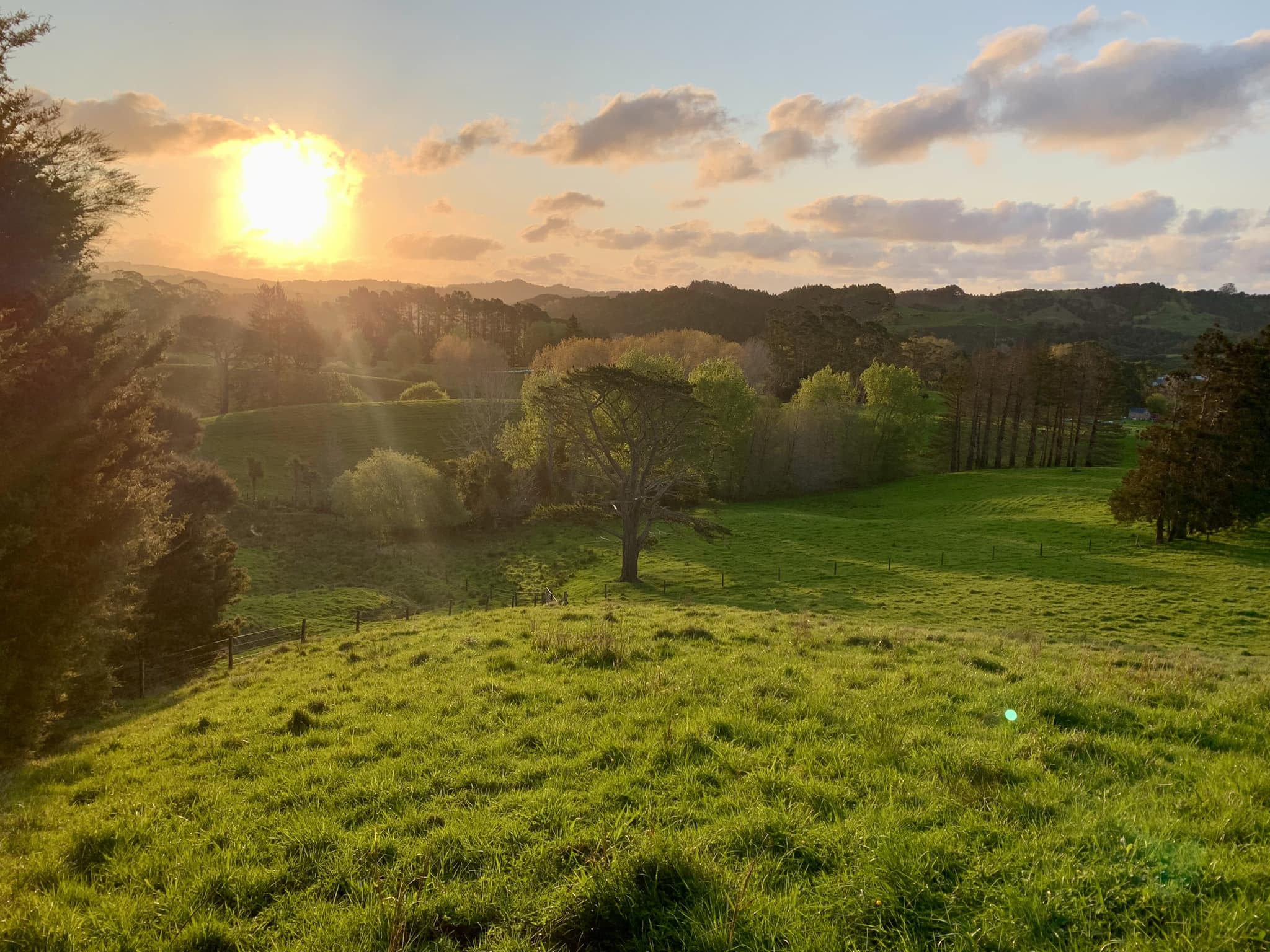
Jules and Mike run a small beef farm under the Kaimai Mamaku Ranges, named for the seven streams that run through it. Cattle are moved by hand, most days of the year, and finished on grass alone.
Buying options
Pick your portion size and we organise the rest, from harvest through to butchery.
Quarter beef
$788 to $1,050
Approx. 52.5 to 70kg carcass
Yielding around 26 to 42kg of cuts
Half beef
$1,575 to $2,100
Approx. 105 to 140kg carcass
Yielding around 53 to 84kg of cuts
Whole beef
$3,150 to $4,200
Approx. 210 to 280kg carcass
Yielding around 105 to 168kg of cuts
Prices shown are for the carcass only. Butchery is paid separately to whichever butcher you choose, roughly $2 to $3 per kg depending on the cuts. Your final price moves with the actual carcass weight.
Seven streams, and the hills they come down from
Seven Streams Farm sits at Katikati in the Bay of Plenty, bordered on one side by the Kaimai Mamaku Ranges. The name is literal. Seven streams run through the property, and every one of them is now fenced off from stock, with troughs put in so the cattle drink without standing in the water.
Jules and Mike have been on the land five years. Jules grew up on her parents’ dairy and deer farm near Matamata. Mike is a licensed builder, which is how most of the infrastructure here has gone in. Before the farm they spent ten years living aboard a yacht through the South Pacific and South East Asia, coming ashore when Covid closed the borders.
On the boundary stands a kauri, understood locally to be the southernmost of its kind.

They call it the Calm Farm
Cattle here are hand reared and handled quietly. There are leader heifers the mob follows, and stock are moved on foot at their own pace rather than pushed. Jules and Mike call it the Calm Farm, and it is the reason animals settle rather than run when someone walks into the paddock.
Grazing is rotational all year round, with the mob shifted to fresh grass daily for nine months or more of the year. In wet weather there are contingency breaks set aside so the ground does not get chewed up. The farm is run slightly understocked, which is what makes that possible.
Soil is tested annually and pasture is renewed without ploughing, using no till methods. Around ninety percent of the grazing land is in diverse pasture, with plantain, chicory and red and white clover undersown, a subterranean clover trial paddock, and tagasaste being trialled as a fodder tree. Shade trees have gone into every grazing paddock.
No pesticide goes onto the pasture. Weeds are dealt with selectively, by cut and paste or a backpack where it is needed, and never by bulk spraying.
Seven Streams Farm sits at Tier 2 on the Out the Farm Gate pathway.

Fifty head, Charolais and Hereford, finished on grass alone
The herd runs at around fifty head. Roughly half are yearlings and rising two year olds being finished, and half are calves coming through behind them. Cattle are bought in as calves from farmers Jules and Mike know and trust, then grown out here and harvested between eighteen and twenty four months.
The cattle are one hundred percent grass fed. No grain at any point. All the winter baleage is grown on the farm itself, so what the animals eat in July came off the same paddocks they graze in January.
Animal health is kept deliberately light handed. Faecal egg counts are done monthly and refugia is managed, so drench is used on evidence rather than habit. Antibiotics are used only where an animal genuinely needs them. The herd gets multi mineral licks along with B12 and selenium. A 1.8 metre deer and pig fence runs along the western boundary against the ranges.

A nursery on the farm, and two thousand trees a year
Jules and Mike run a native nursery on the property and plant around two thousand trees a year out of it. The erosion prone hills have been fenced off, along with the clusters of bush and the wetlands.
Kahikatea is going back in, and so is swamp maire, a wetland tree now rare across much of the country. The farm supports Project Parore by donation, and hosts international volunteers who come and work on the planting.
A farm stay is opening here shortly, so it will be possible to come and see the place for yourself.

What to expect, from order to pickup
A few things worth knowing before you order. Click any question to open it.
The ordering process, start to finish
Seven Streams Farm sells beef by the quarter, the half and the whole carcass. You pay the farm for the carcass, then pay the butcher separately for the butchery.
When you place an order you choose your cuts using our online cut sheet. We organise the rest, including booking the butcher and getting them your completed sheet. If you are not sure what to pick, we can help you fill it in.
We process to order, so we only go ahead once enough orders are booked. Once a harvest date is confirmed you will be notified by email. Collection is about two weeks after that, which allows around 10 days hanging and ageing before the carcass is cut and packed.
Seven Streams beef is processed by Tauranga Homekill at 120 Birch Avenue, Tauranga, and that is where you collect it.
Which size should I choose
Seven Streams Farm sells quarters, halves and wholes.
A quarter is roughly 52 to 70kg of carcass, which comes back as something like 26 to 42kg of cuts. That suits a couple or a small household with an ordinary freezer.
A half is a substantial amount of meat, so it is worth having a chest freezer sorted before your collection date, or a friend to split it with. A whole suits a large family, or two or three households buying together.
If you are caught between two sizes, get in touch. We can often pair buyers up on the same carcass.
Trim and ground products
Roughly 20 to 25% of your beef comes back as trim, the parts that are not named cuts like steaks or roasts. That includes brisket, neck, flank and other cuts the butcher grinds rather than portions.
You decide how it is allocated. Most goes to mince by default, but on your cut sheet you can ask for some of it as sausages in your choice of flavours, patties or biersticks. Each option has its own per kg processing rate.
Telling the butcher how your family eats, whether that is more burgers, more sausages or more mince for slow cooking, helps them split your trim the way you will actually use it.
Payment terms
- Once your order and cut sheet are in, a deposit of $500 secures it. The deposit is the same whatever size you order.
- The balance for the carcass is due to Seven Streams Farm once the animal is harvested and weighed.
- The butcher’s fee is due to your chosen butcher on or before collection.
Coming soon at Seven Streams
A farm stay is opening on the property. If you would like to know when it is taking bookings, say so when you order and we will pass it on.